Core Subjects
Inspiring Excellence Through Education and Faith
Mathematics
Mathematics in a Catholic education setting encourages students to become confident, capable and resilient learners who can apply their knowledge and skills in meaningful ways. Through engaging and challenging learning experiences, students develop their understanding of number, algebra, measurement, geometry, statistics and problem-solving. Mathematics lessons promote logical thinking, perseverance, collaboration and the ability to communicate ideas clearly and effectively.
Students are encouraged to see Mathematics not only as an academic subject but also as a practical tool that can be applied to everyday life, sustainability initiatives and future career pathways. Within a Catholic school environment, Mathematics also provides opportunities for students to recognise the order, patterns and wonder present in God’s creation. Students are supported to use their skills responsibly and ethically while developing confidence in their own abilities and a positive attitude towards learning.
English
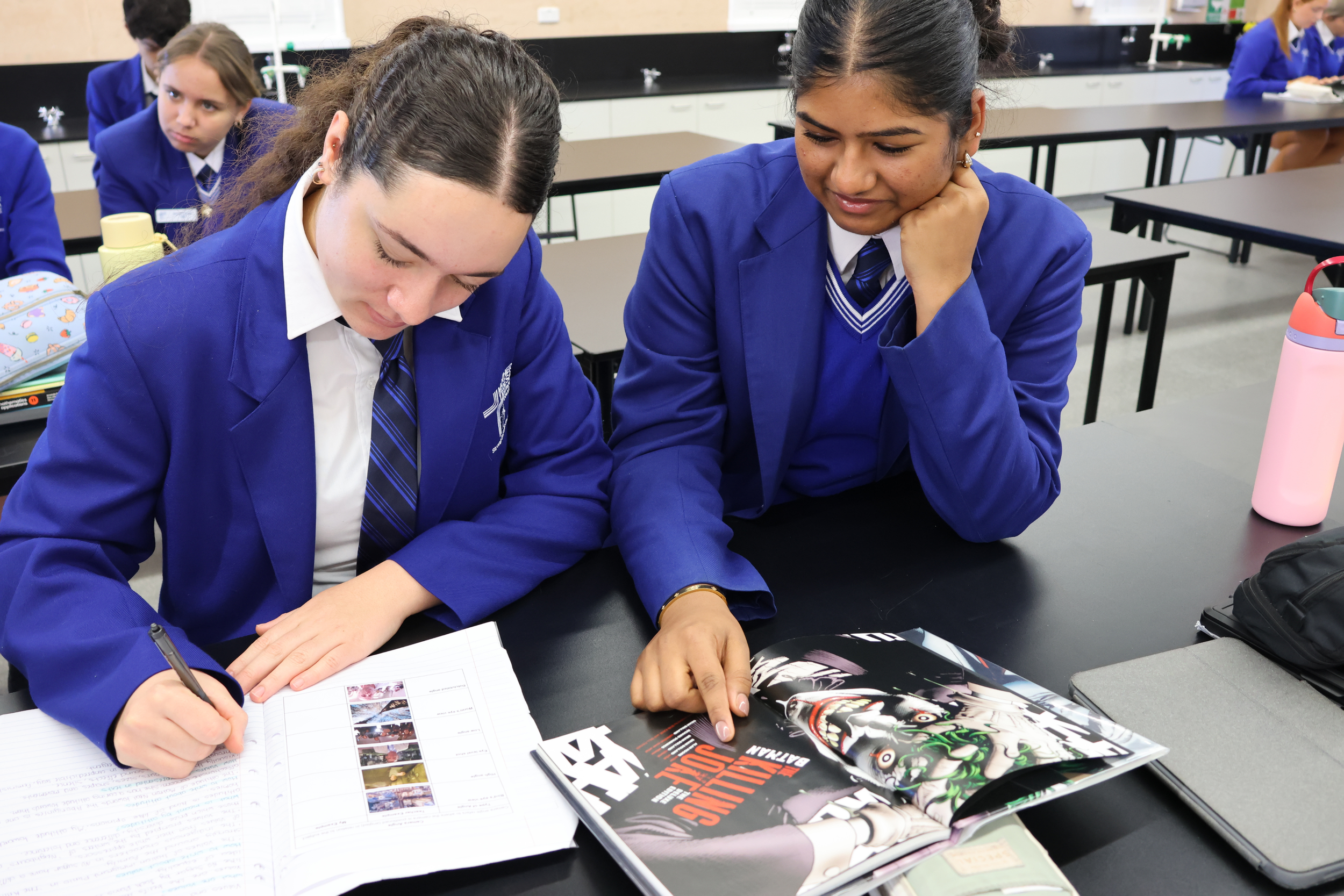
English plays a vital role in helping students develop strong literacy, communication and critical thinking skills that are essential for success in all areas of life. Through reading, writing, speaking, viewing and listening, students explore a wide range of texts, ideas and perspectives that deepen their understanding of themselves and the world around them.
In Catholic education, English also provides opportunities for students to reflect on values such as compassion, justice, empathy, respect and sustainability. Students are encouraged to communicate thoughtfully and respectfully while developing confidence in expressing their own ideas and opinions. Through literature and language studies, students learn to appreciate diverse cultures, experiences and viewpoints while strengthening their creativity and imagination.
English classrooms foster curiosity, collaboration and a love of learning, supporting students to become effective communicators and lifelong learners who can contribute positively to their communities and the wider world.
Science
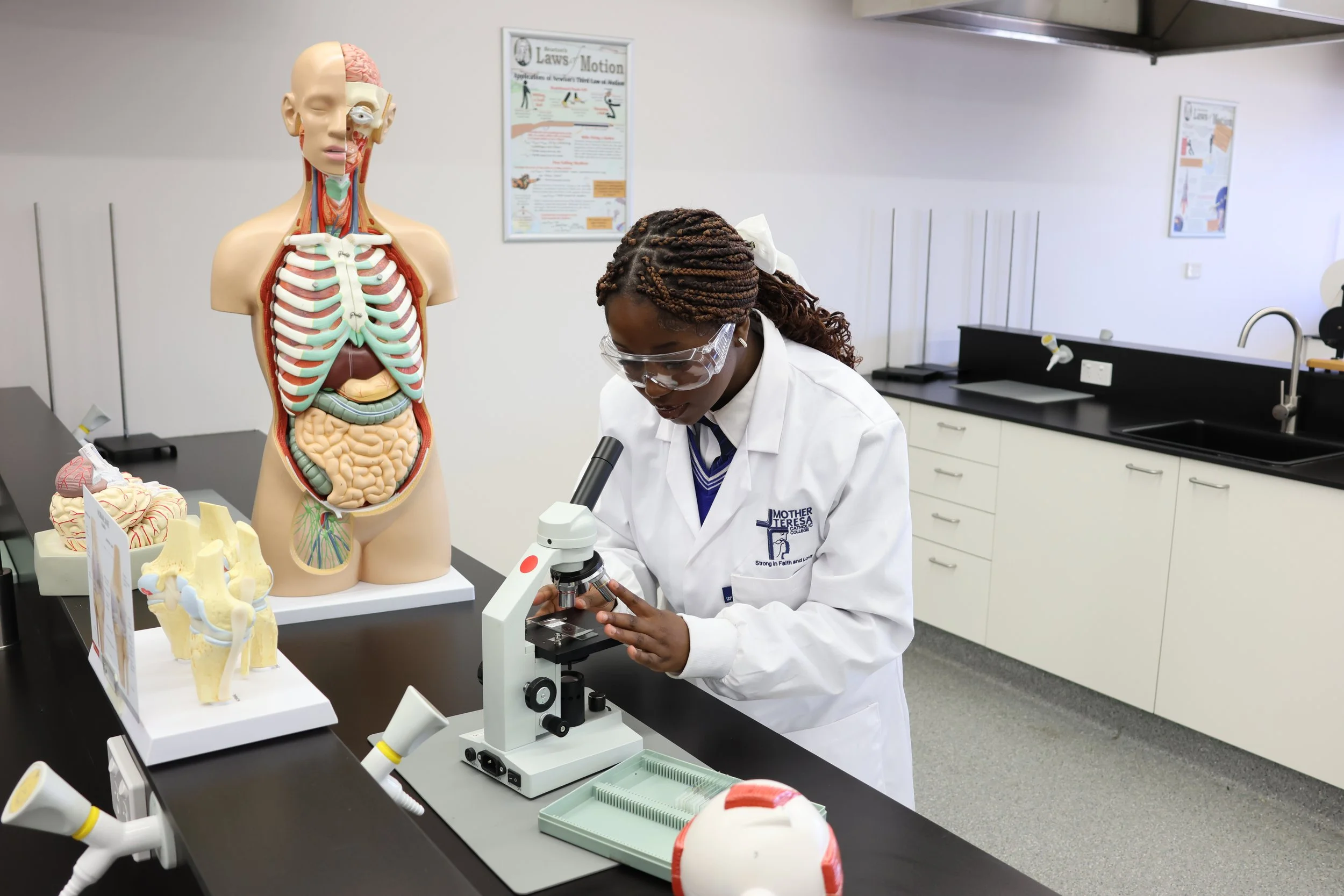
Science education inspires students to explore, question and investigate the world around them through inquiry, experimentation and discovery. Students develop their understanding of scientific concepts across a range of areas including biology, chemistry, physics, earth and space sciences and environmental studies. Practical investigations and hands-on learning experiences encourage students to think critically, solve problems and apply their knowledge in real-world contexts.
Within a Catholic education setting, Science encourages students to appreciate the beauty and complexity of creation and to recognise their responsibility to care for the environment and the wellbeing of others. Sustainability is an important focus within Science learning, helping students understand how scientific knowledge and innovation can support the responsible use of resources and protect the world for future generations. Students are supported to consider the ethical implications of scientific developments and how science can be used to improve lives and contribute positively to society.
Science learning promotes curiosity, innovation and resilience while equipping students with the skills and knowledge needed for future study, emerging technologies and a rapidly changing world.
HASS (Humanities and Social Sciences)
Humanities and Social Sciences (HASS) helps students develop a deeper understanding of history, geography, economics, civics and society. Through the study of people, places, cultures and events, students gain an appreciation of how communities have evolved and how individuals and societies interact both locally and globally.
In Catholic education, HASS encourages students to reflect on important values such as justice, service, stewardship, dignity, respect and sustainability. Students are encouraged to become informed and compassionate citizens who actively contribute to creating a fair, inclusive and environmentally responsible society. Through inquiry and discussion, students develop critical thinking, research and decision-making skills while learning to consider different perspectives and understand contemporary issues affecting communities and the environment.
HASS provides opportunities for students to connect classroom learning with real-world experiences, empowering them to become active participants in their communities and responsible global citizens guided by Gospel values.
Religious Education
Religious Education is an important part of learning within a Catholic school community, helping students develop an understanding of the teachings of Jesus Christ and the traditions of the Catholic Church. Through prayer, Scripture and meaningful learning experiences, students explore faith, values, compassion and service to others.
Students are encouraged to reflect on their relationship with God, themselves and the wider community while learning how Gospel values guide everyday life. Religious Education also promotes social justice, sustainability and stewardship, supporting students to become caring, respectful and responsible members of society.